Is Koorui a Good Monitor Brand? Honest Verdict
Table of contents
Yes, Koorui is a good monitor brand if you want strong gaming specs for less money. It is the consumer brand of HKC Group, a Chinese display maker, and its screens regularly undercut bigger names on refresh rate, resolution and panel type at the same price. The trade-offs are the usual budget ones: plain stands, some variation from unit to unit, and a US warranty that covers the display screen for only one year. Buy it for the panel, test it early, and it is a smart value pick.
Here is who Koorui is, what the current range looks like, and who should skip it.
Who is Koorui?
Koorui is a brand under HKC Group, set up on May 4, 2021. That ownership is the most useful fact about it. HKC describes itself as an intelligent manufacturing and semiconductor technology group focused on core display components, with manufacturing and R&D bases in Shenzhen, Chongqing, Chuzhou, Mianyang and other cities. You can read the company’s own summary on Koorui’s about page.
So Koorui is not a pop-up label slapped on random stock. It has a large display manufacturer behind it, which helps explain how it can price the way it does. What it lacks is a long track record of its own. A brand that started in 2021 simply has fewer years of reliability history than Sceptre, which has sold displays since 1984 (see our verdict on whether Sceptre is a good monitor brand).
One practical detail matters for US buyers. Koorui.com does not take direct orders right now. Its official US stores are on Amazon and Walmart, so your return window and first line of help come from those platforms.
Koorui’s current monitor lineup
Koorui’s US site sorts its monitors into gaming and business models, plus one portable screen. The gaming side is where the brand puts its effort. The table below groups the current models by what they are for, using the names and specs Koorui lists on its own store.
| Group | Who it is for | Example models |
|---|---|---|
| Business | Office work, study and second screens | E2212H: 21.5 inch, 1080p, 120Hz VA. E2412F: 23.8 inch, 1080p, 100Hz VA. 24N5CA and 27N5CA: curved VA, 100Hz and 144Hz |
| Curved VA gaming | Budget gamers who want deep contrast and a curve | 24E6CA and 27E6CA: 1080p, 180Hz. 27E6QCA: 1440p, 180Hz. G3221SC: 31.5 inch, 1440p, 170Hz |
| Fast IPS gaming | Faster motion and wider viewing angles | G2421V: 24 inch, 1440p, 180Hz. G2721P: 27 inch, 1440p, 200Hz. G2721E: 27 inch, 1440p, 320Hz. G2741L: 27 inch 4K at 160Hz or 1080p at 320Hz |
| Ultrawide | Sim racing, wide games and timelines | 34E6UC: 34 inch, 3440 x 1440, 200Hz VA. G3441XC: 34 inch, 3440 x 1440, 240Hz VA |
| Mini LED and OLED | Players who want real HDR on a budget | S2721PM: 27 inch, 1440p, 200Hz Mini LED, HDR 1000. S2741LM: 27 inch 4K QD-Mini LED, HDR 1400. S3241XO: 31.5 inch 4K OLED, 240Hz |
| Portable | Laptop users who need a travel screen | E1512A: 15.6 inch, 1080p, 60Hz IPS |
Two patterns stand out. First, almost every gaming model now starts at 180Hz, well past the old 144Hz baseline. Second, the top of the range (the S models) has moved into Mini LED and OLED, so the brand now spans everything from cheap 1080p office screens to premium-style HDR panels. Koorui updates models often and some names repeat with small spec changes, so match the exact model code to the listing before you buy.
What you get for the money
You get more panel per dollar than most mainstream brands offer. That is the core of the Koorui pitch, and it mostly holds up.
- High refresh rates at low prices. 180Hz is the floor for the gaming range, and 1440p models reach 200Hz and 320Hz.
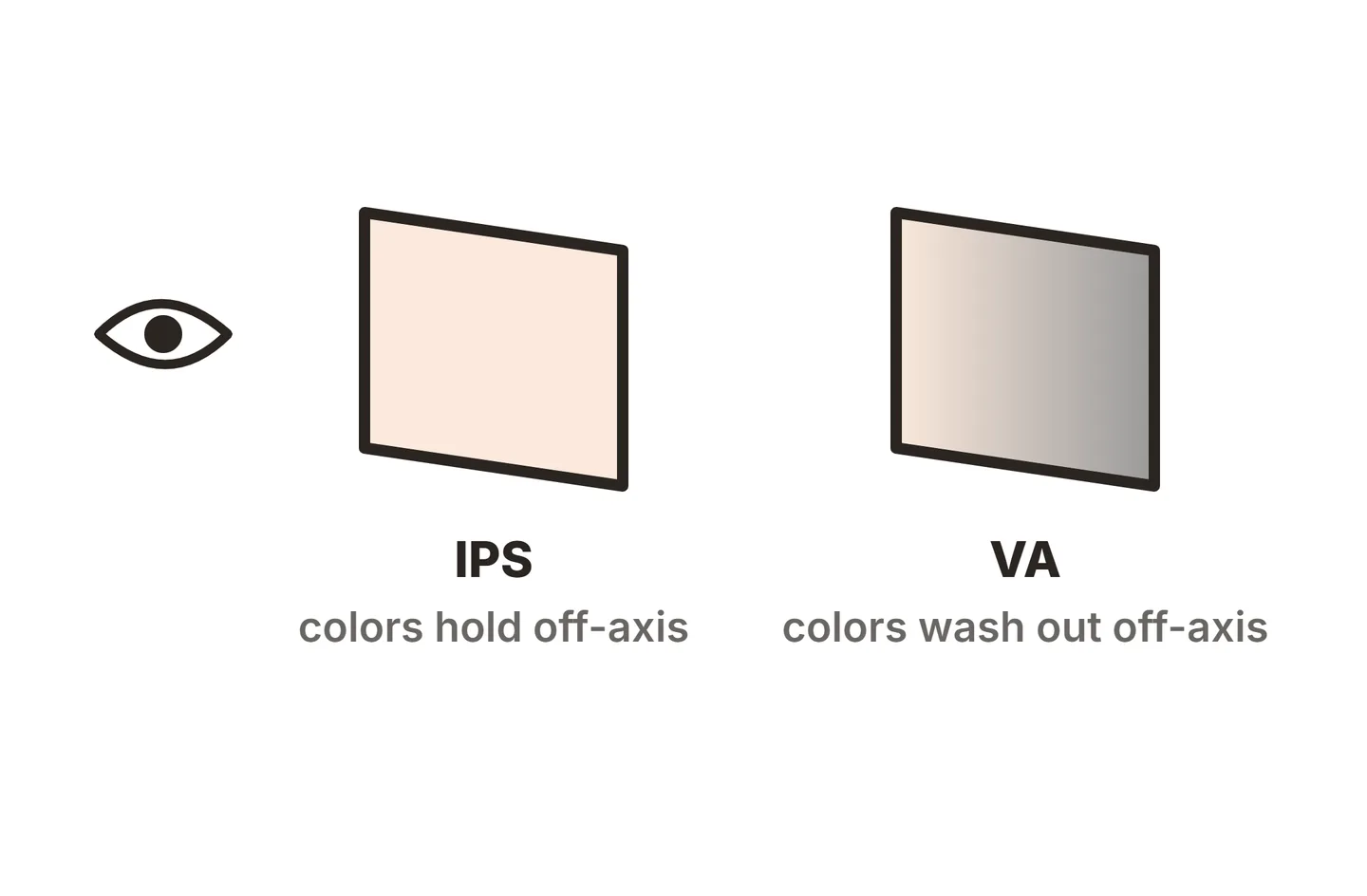
- A real choice of panel type. The curved models use VA, which has much deeper contrast (Koorui lists 4000:1 on the E2412F). The G models use Fast IPS, which handles motion and side viewing better.
- Good color coverage for the class. Koorui lists 99% sRGB on models such as the E2412F, which is plenty for everyday work, photos and games.
- Adaptive-Sync on most gaming screens. This cuts tearing when your frame rate moves around.
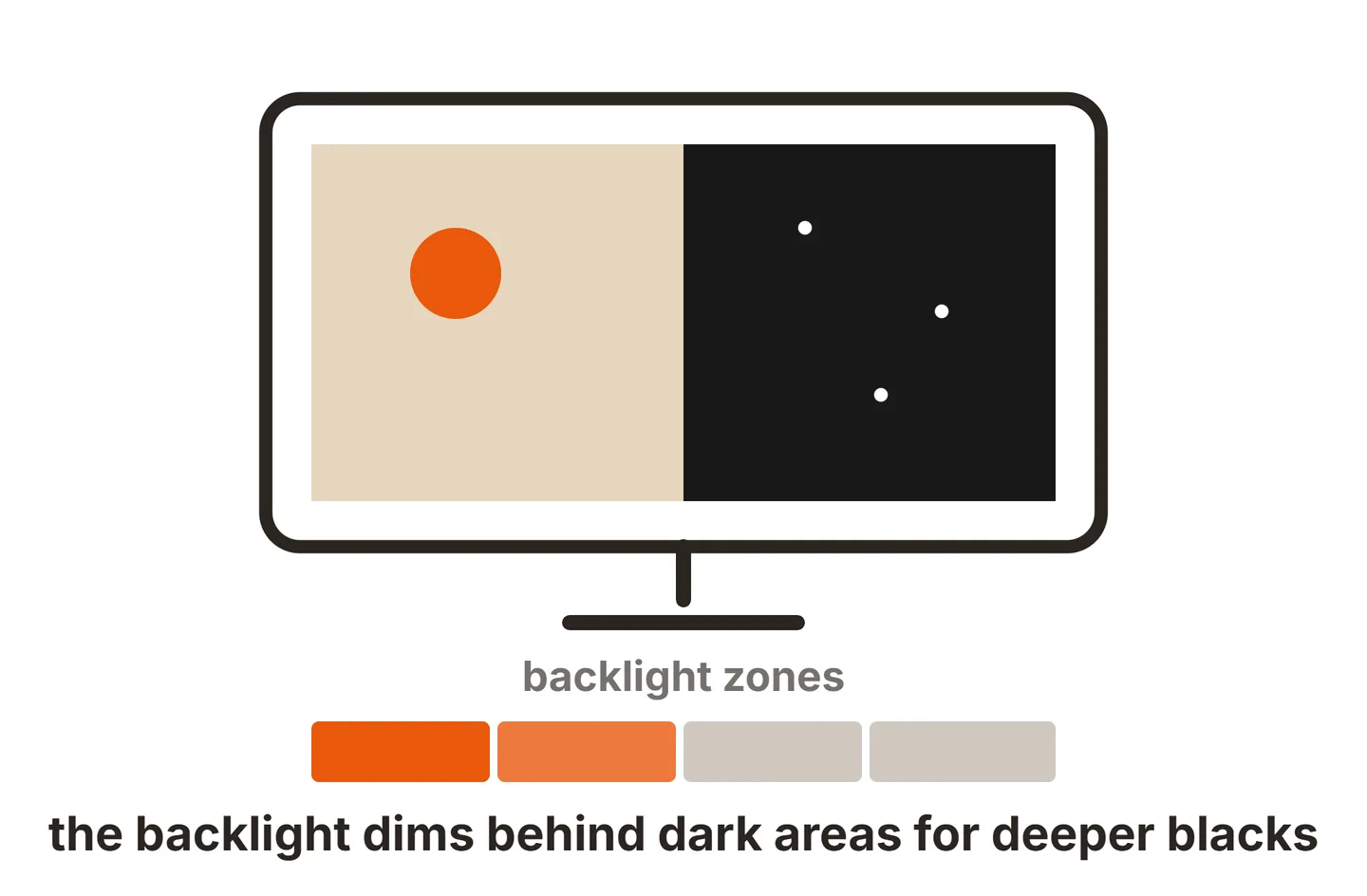
- A rare budget path to Mini LED and OLED. The S2721PM, S2741LM and S3241XO bring local dimming and OLED contrast into a range that is still priced as a value brand.
Where Koorui falls short
The savings come from somewhere, and you will notice it in a few predictable places.
- Stands are basic. Most budget models tilt and little else. If you need height adjustment, plan on a VESA arm.
- Build is plain plastic. It works, but it does not feel premium.
- Quality varies from unit to unit. This applies to every budget brand. A share of units in any cheap line ship with a stuck pixel, uneven backlight or light banding in gradients, so check yours on day one.
- HDR 400 is not real HDR. Several G models carry an HDR 400 tag. That level allows HDR signals but lacks the brightness and local dimming to look dramatic. Only the Mini LED and OLED S models give a proper HDR picture.
- Support is mostly online. There is no Koorui store to walk into. Help runs through the retailer first, then Koorui’s support email.
None of this is a dealbreaker for a gaming or office screen. It does mean the brand suits buyers who are willing to inspect what arrives.
Koorui warranty and support
Koorui’s US warranty, as stated on its warranty and returns policy, covers the display screen for one year and other accessories for three years. Koorui notes that this describes its US warranty only. If you bought in another country, the regional Koorui support team sets the terms.
Because Koorui does not sell direct in the US, the claim process starts with whoever sold you the monitor:
- Contact the original platform (Amazon or Walmart) or Koorui support at na.support@koorui.net.
- Give the platform name, order number, purchase date and model. For a warranty claim, add the serial number and photos or a short video of the fault.
- Describe the problem and what you want, such as a replacement or a repair.
- Wait for instructions before shipping anything. Koorui asks buyers not to send a monitor to any address until the correct destination is confirmed.
Koorui does not list a fixed return period on that page. Your order’s return deadline comes from the platform, and shipping costs follow that order’s terms. Warranty service is separate, so a faulty screen can still qualify after the return window closes.
Is Koorui good for gaming?
Yes. Gaming is Koorui’s strongest use case. A 27 inch 1440p panel at 200Hz, like the G2721P, gives most players more than they need, and our guide on whether 165Hz is good for gaming explains why gains above that point get smaller for most people.
Pick the panel type for the games you play. The curved VA models look rich in dark, slow games and films, but VA pixels can smear in fast dark scenes. The Fast IPS G models are the better pick for shooters and esports. Product listings quote “1ms MPRT” response times, which describes a motion blur reduction mode, not the pixel speed. Our explainer on whether a 5ms response time is good covers how to read those numbers.
For a 4K screen that can also run fast esports games, the G2741L’s dual mode (4K at 160Hz or 1080p at 320Hz) is one of the more unusual options at its price.
Koorui vs Sceptre vs KTC
These three brands fight for the same budget gamer. Sceptre is the long-running US value brand. KTC is the consumer brand of a large Chinese display maker, like Koorui. Our full verdict on whether KTC is a good monitor brand covers it in more depth.
| What to compare | Koorui | Sceptre | KTC |
|---|---|---|---|
| Company | Brand under HKC Group, set up in 2021 | Privately owned, City of Industry, California, since 1984 | Own brand of Shenzhen KTC Technology, a listed display maker founded in 1995 |
| Where to buy in the US | Amazon and Walmart stores | Major US retailers | KTC's own store, plus retailers |
| Standard warranty | 1 year on the display screen, 3 years on other accessories | 1 year limited parts and labor | 3 years on most products, 1 year on some |
| Strongest models | Fast IPS 1440p gaming, Mini LED and OLED | Big curved and ultrawide screens for the price | Mini LED, OLED and fast 1440p gaming |
| Main weak spot | Short panel coverage, young brand | Plain build, average factory color | Support quality varies by region and channel |
The warranty row is the clearest split. If two models look equal on paper, KTC’s longer coverage can be worth a small premium. Koorui wins when its price is clearly lower or when you want a specific panel, such as its 320Hz IPS or its Mini LED models. Other value names like Titan Army and Z-Edge make the same trade, strong specs for thinner support.
Who should buy a Koorui monitor?
Koorui makes sense for:
- Budget and mid-range gamers who want 1440p at 180Hz or more.
- Anyone after cheap Mini LED or OLED and willing to test it carefully.
- Office and study setups that need a second or third screen at a low price.
Skip it if you need a long panel warranty, in-person service or a fully adjustable stand out of the box. A brand with three years of panel coverage will cost more, but that cost buys peace of mind.
Your first-week checklist
Test a new Koorui monitor while the store return window is still open. That window is faster and cheaper than any warranty claim.
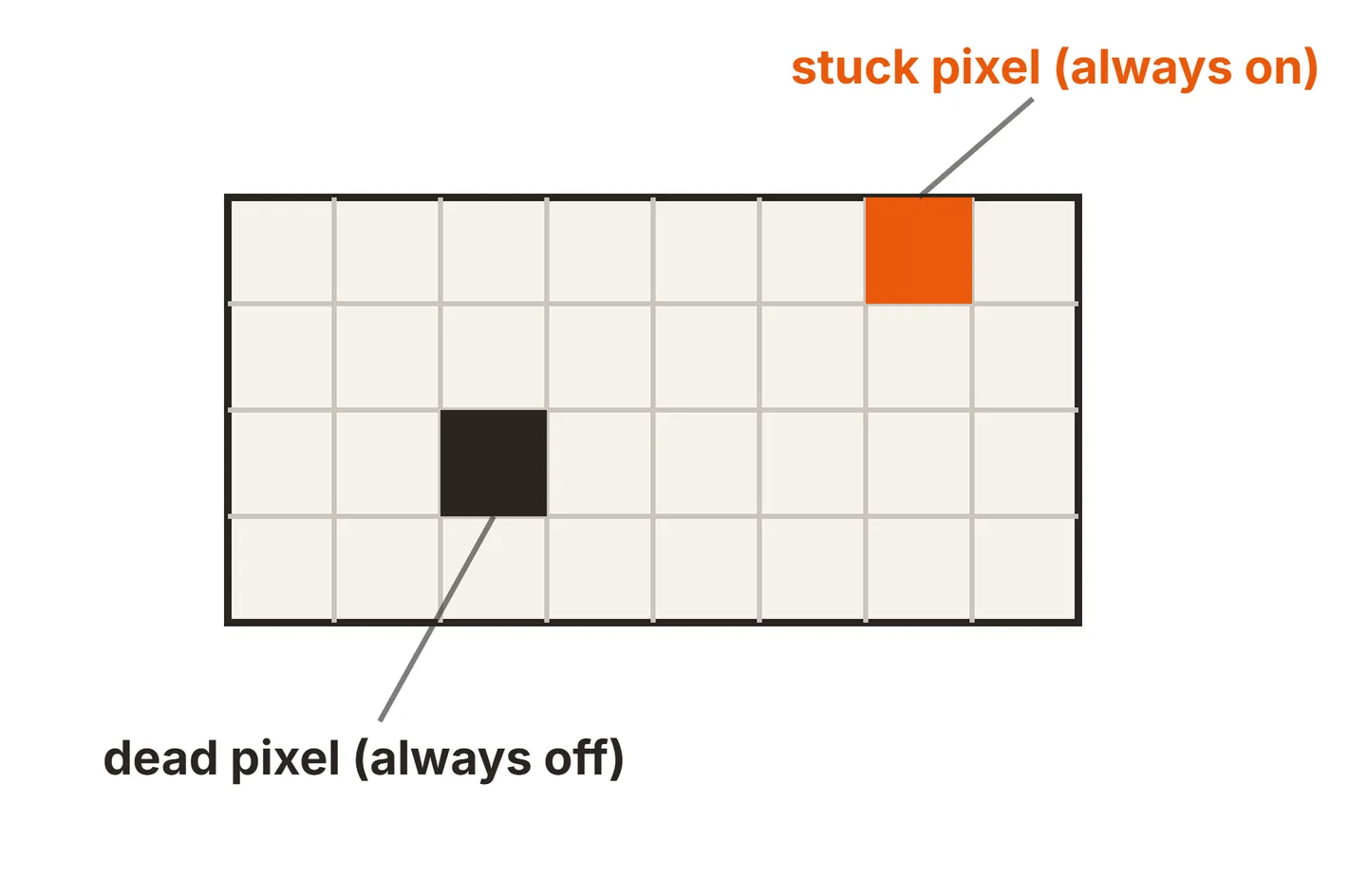
- Check for dead and stuck pixels. Show full-screen black, white, red, green and blue. Our guide to LED monitor dead pixels explains what to look for.
- Look for backlight bleed. Show a black screen in a dark room and check the corners. Our guide to LCD screen bleeding shows what normal looks like.
- Confirm the full refresh rate. Use DisplayPort if the model has it, set the rate in Windows, and check it in a refresh test.
- Turn on Adaptive-Sync in the monitor menu and in your graphics driver.
- Try the overdrive settings. Pick the level with the least smearing and no bright halos.
- Save your order details and the serial number in case you need warranty help later.
Conclusion
Koorui is a good monitor brand for value buyers, especially gamers. It is HKC Group’s consumer brand, and it sells fast IPS, curved VA, Mini LED and OLED monitors for less than most rivals. Buy one when the panel and price beat the competition and you are happy with a basic stand. Remember that the US warranty covers the screen for one year, so test it in the first week. For more brand verdicts and buying guides, visit our monitor knowledge base or browse all monitor buying guides.
Frequently asked questions
Who makes Koorui monitors?
Koorui is a brand under HKC Group, a Chinese company focused on display components, with manufacturing and R&D bases in cities including Shenzhen, Chongqing, Chuzhou and Mianyang. Koorui itself was set up on May 4, 2021.
How long is the Koorui warranty in the US?
Koorui's US warranty page lists one year for the display screen and three years for other accessories. Coverage in other countries can differ, so check with the regional Koorui support team if you bought outside the US.
Where can I buy Koorui monitors in the US?
Koorui.com does not take direct orders at the moment. Its official US stores are on Amazon and Walmart, so returns run through those platforms first, and warranty help comes from Koorui support afterward.
Are Koorui monitors good for gaming?
Yes, for budget and mid-range gaming. The lineup runs from 180Hz curved VA screens up to a 320Hz 1440p Fast IPS model, and most gaming models list Adaptive-Sync. Competitive players should still compare measured response times for the exact model.
Is Koorui better than Sceptre?
They target the same buyer. Koorui leans harder into fast IPS, Mini LED and OLED gaming screens, while Sceptre has a longer US history and more office sizes. Both cover the panel for one year, so compare the exact models.